
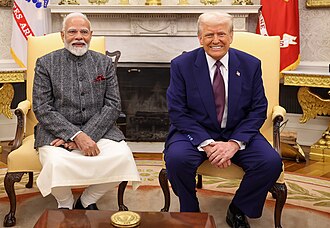
India’s Ambassador to the United States, Vinay Mohan Kwatra, emphasized that economic and policy changes in India over the past decade have significantly reshaped Indo-US relations. He highlighted that reforms initiated post-2014 have notably strengthened trade, investment, and strategic cooperation between the two nations. Kwatra made these remarks during the ‘Capital Hill Summit 2026’ held in Washington.
Kwatra underscored the critical role of India’s economic transformations in bolstering global partnerships. Speaking at an event organized by the US-India Friendship Council, he stated that India’s rapid economic growth and reforms are pivotal factors driving robust international alliances. This dynamism, according to him, is enabling the expansion of cooperation between India and the US into new sectors.
The ambassador outlined a significant bilateral trade goal set by both countries: to elevate their trade volume to $500 billion by 2030. Presently, trade between the two stands at approximately $220 billion. Kwatra noted that alongside trade, collaboration in technology, energy, and manufacturing sectors is advancing swiftly.
Highlighting defense cooperation, Kwatra pointed out that India has become a major foreign user of several key American defense platforms. He mentioned that the militaries of both countries are working together at various levels to tackle shared security challenges. Moreover, he noted the growing coordination between India and the US to maintain stability in the Indo-Pacific region.
Discussing nuclear energy, Kwatra touched upon opportunities for collaboration in the civilian nuclear sector, which have opened up following the enactment of the SHANTI Act. This development is expected to further enhance technical and industrial cooperation between the two nations. Additionally, he referenced Prime Minister Narendra Modi’s address to the US Congress, emphasizing that India and the US are not just strategic partners but also natural allies grounded in shared democratic values. The summit, attended by US lawmakers like Ro Khanna, Deborah Ross, Tim Moore, and Senator Steve Daines, also explored future relations, global security, and economic cooperation, with experts predicting a significant role for this partnership in global politics and trade in the coming years.